
Indian Winter Comfort Foods: Pantry Guide for Gajar Halwa, Sarson ka Saag and More
When the evenings turn cold, kitchens across North India and Pakistan switch to a different set of dishes: carrot halwa simmering for an hour, mustard greens cooked down with maize flour, laddoos packed with ghee and jaggery, and pots of nihari or haleem left to cook slowly. In the US, most of these dishes are easy once your pantry holds the right handful of ingredients. This guide is an Indian winter foods pantry list built dish by dish: what to buy, what a regular supermarket stocks, and what is worth ordering from a South Asian grocer.
Quick answer
For classic Indian and Pakistani winter dishes, stock ghee, whole green cardamom, jaggery, makki ka atta (maize flour), whole wheat atta, yellow moong dal, basmati rice, sesame seeds, edible gum (gond), mixed nuts, strong CTC black tea and a few whole spices. Buy carrots, mustard greens, milk and meat fresh; the rest keeps for months.
What Indian groceries do I need for winter dishes?
The table below is the short version of this guide: the shelf-stable ingredients that recur in winter cooking, which dishes use them, and how to store them. Fresh items are covered in each dish section.
| Ingredient | Used in | Storage tip |
|---|---|---|
| Ghee | Halwa, laddoo, saag tadka, khichdi, makki ki roti | Airtight jar, away from heat; use a clean, dry spoon |
| Green cardamom (elaichi) | Halwa, chai, laddoo, nihari spice mix | Buy whole pods and crush as needed |
| Jaggery (gur) | Til laddoo, gond laddoo, chikki, served with makki ki roti | Sealed container; it absorbs moisture |
| Makki ka atta (maize flour) | Makki ki roti, thickening sarson ka saag | Cool, dry place; buy smaller packs |
| Whole wheat atta | Gond laddoo, pinni, nihari thickening, rotis | Airtight bin; check the best-by date |
| Yellow moong dal | Khichdi, moong dal halwa, haleem | Airtight jar; keeps well for months |
| Basmati or short-grain rice | Khichdi, served alongside many winter dishes | Airtight container, cool cupboard |
| Mixed lentils and broken wheat | Haleem | Store each separately and label |
| Sesame seeds (til) | Til laddoo, chikki, gajak | Refrigerate opened packs if your kitchen is warm |
| Edible gum (gond) | Gond laddoo, panjiri | Sealed jar; it keeps for a long time |
| Nuts and raisins | Halwa, laddoo, panjiri, garnishes | Fridge or freezer to stop them turning rancid |
| CTC Assam tea and chai spices | Masala chai | Airtight tin, away from strong smells |
| Whole spices and nihari or haleem masala | Nihari, haleem, saag tadka | Whole spices last longer than ground ones |
How do you make gajar halwa, and what do you need?
Gajar halwa, also called gajar ka halwa, is the dessert most people link with North Indian and Pakistani winters. In the region it is traditionally made with the deep red carrots that appear in markets during the cold months. In the US you will mostly find orange carrots, and they work well; the halwa simply comes out more orange than red.

Shopping list
- Fresh: carrots and full-fat milk.
- Pantry: ghee, sugar, whole green cardamom.
- Garnish: cashews, almonds, pistachios and raisins, in any mix you like.
- Optional: khoya (also called mawa), the thickened milk solids sold fresh or frozen at Indian grocers, for a richer, quicker halwa.
Short how-to
- Peel and finely grate the carrots; a food processor saves time.
- Cook the carrots in a heavy pan with milk, stirring often, until the milk has almost fully reduced. This slow part can take close to an hour.
- Add sugar; the mixture will loosen again, so keep cooking until it thickens.
- Stir in ghee and freshly crushed cardamom, then fry the nuts and raisins in a little ghee and fold them in. If you are using khoya, crumble it in near the end.
Moong dal halwa, made from ground yellow moong dal roasted slowly in ghee, is the other classic winter halwa. For a wider look at milk sweets and mithai, see our Diwali sweets and gifting guide.
What do you need for sarson ka saag and makki ki roti?
Sarson ka saag with makki ki roti is the signature winter meal of Punjab, on both sides of the border: slow-cooked mustard greens eaten with maize flatbread, white butter or ghee, and often a piece of jaggery.
Shopping list for the saag
- Fresh: mustard greens (the main green), spinach, and if you can find it, bathua (also called lamb's quarters or chenopodium leaves). Many recipes also add a little radish greens. Mustard greens are often sold in US supermarkets through the winter.
- Aromatics: onion, garlic, ginger and green chillies.
- Pantry: makki ka atta, which thickens the saag, plus ghee, salt and a pinch of red chilli powder for the tadka.
Shopping list for makki ki roti
- Makki ka atta: finely ground maize flour sold by Indian brands. It is not the same as cornstarch, and it behaves differently from masa harina, which is made from treated corn for tortillas. If a recipe calls for makki ka atta, buy flour labeled that way.
- Extras: warm water, salt, and ghee or butter for cooking.
Short how-to
- Wash the greens thoroughly and chop roughly.
- Simmer the greens with ginger, garlic, green chillies and salt until completely soft.
- Mash or blend coarsely, then stir in a few spoonfuls of makki ka atta and cook further until the saag thickens and loses any raw flour taste.
- Finish with a tadka of ghee, onion, garlic and a little chilli.
- For the roti, knead makki ka atta with warm water into a soft dough, pat each piece into a round by hand or between sheets of plastic, and cook on a hot tawa or skillet, adding ghee on both sides.
Maize dough has no gluten and cracks easily, so pat it out on parchment and transfer it in one move. Frozen sarson ka saag is also sold by many South Asian grocers if you would rather skip the washing and chopping. You can browse atta and flours at Distacart to compare maize and wheat flour pack sizes.
Which laddoos are made in winter?
Winter is laddoo season in many North Indian and Pakistani homes: dense sweets made in a big batch and eaten one at a time with tea.

Gond laddoo
Gond is an edible plant gum sold as small, glassy crystals. When fried in hot ghee it puffs up and turns light and crunchy. Gond laddoo combines that fried gum with whole wheat atta roasted in ghee, sugar or powdered jaggery, chopped nuts and often dried coconut. Gond is also the base of panjiri, a loose roasted flour mixture that many families make in winter.
- Pantry: gond, whole wheat atta, ghee, sugar or jaggery, almonds, cashews, dried coconut, cardamom.
- Tip: fry gond in small batches over medium heat so it puffs fully rather than staying chewy in the middle.
Til laddoo and chikki
Til laddoo is made from toasted sesame seeds bound with melted jaggery. It is closely tied to Lohri and Makar Sankranti in mid-January, when sesame and jaggery sweets are shared widely. Chikki and gajak use the same idea with peanuts or sesame set into a brittle or layered sweet.
- Pantry: white sesame seeds, jaggery, a little ghee, optional peanuts and cardamom.
- Tip: shape quickly with ghee-greased palms, because the mixture sets as it cools.
Pinni, a Punjabi sweet of atta roasted in ghee with sugar, khoya and nuts, uses almost the same shopping list as gond laddoo.
If you would rather buy than make, browse Indian sweets and mithai at Distacart and check each listing for ingredients and shipping details.
Why is masala chai a winter staple?
Chai is a year-round drink, but in winter it anchors the day, and a strong, spiced cup pairs naturally with every sweet in this guide.

Shopping list
- Tea: strong black tea, ideally CTC (granular) Assam, which holds up to milk and spices.
- Spices: whole green cardamom and fresh ginger as the base, with cloves, cinnamon and black peppercorns for extra warmth. A ready-made chai masala blend is a handy shortcut.
- Fresh: whole milk, or oat or soy milk for a dairy-free cup, and sugar or jaggery to taste.
Our step-by-step guide to making masala chai at home covers ratios and timing, and you can search masala chai teas and spice blends at Distacart to compare options.
Kashmiri chai
In Pakistan and Kashmir, Kashmiri chai (noon chai or pink tea) is a winter favourite at weddings and gatherings. A special green tea leaf is brewed long with a pinch of baking soda, then finished with milk, which turns it pink; it is traditionally salted and topped with crushed pistachios. Buy tea labeled for Kashmiri chai rather than regular green tea.
For something to serve alongside, our list of Indian snacks for tea time covers namkeen, biscuits and other shelf-stable picks.
What do you need for a winter khichdi?
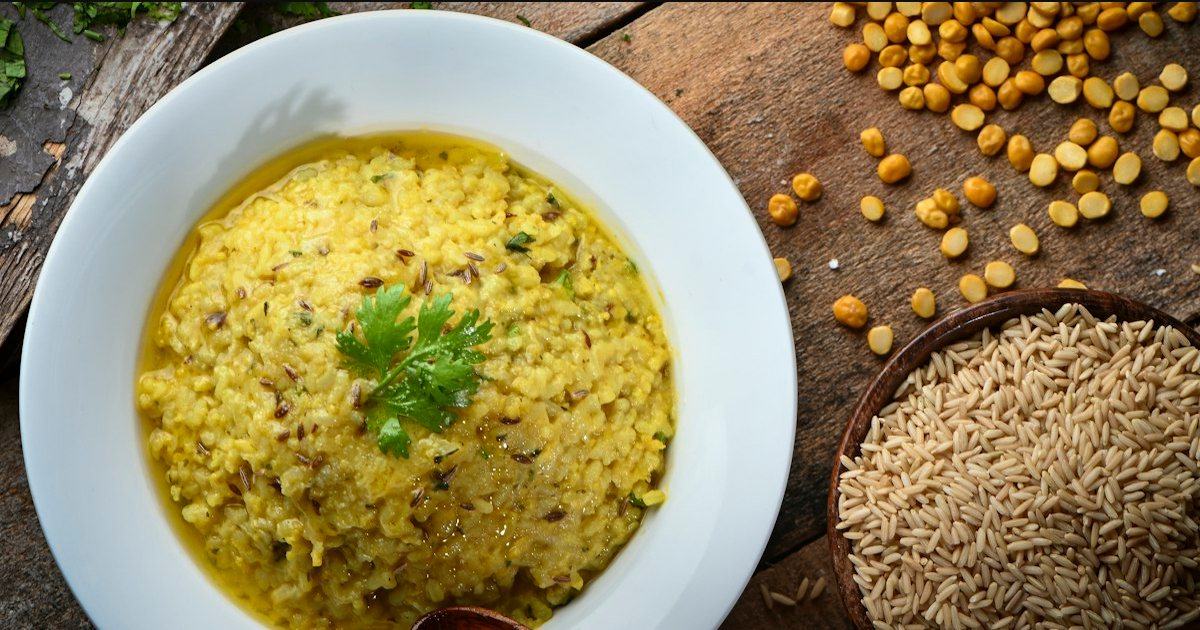
Khichdi is the one-pot comfort meal of South Asia: rice and lentils cooked together until soft, finished with ghee. Many families make it on cold nights, and in parts of North India it is cooked and shared at Makar Sankranti in January.
Shopping list
- Grains and lentils: rice (short-grain or basmati) and yellow moong dal, roughly in equal amounts for a soft khichdi.
- Spices: cumin seeds, turmeric, a pinch of asafoetida (hing), fresh ginger, and optional bay leaf, cloves or black pepper.
- Finishing: ghee, plus papad, pickle, yogurt or a simple raita on the side.
Short how-to
- Rinse the rice and moong dal together until the water runs mostly clear, then soak for 20 to 30 minutes if you have time.
- Heat ghee in a pressure cooker or heavy pot, add cumin and hing, then ginger and any vegetables.
- Add the rice and dal, turmeric, salt and plenty of water, as khichdi is meant to be soft and slightly loose.
- Cook until the grains break down, then stir in more ghee before serving.
Some regions make bajra (pearl millet) khichdi in winter instead of rice khichdi. To understand the lentils involved, see our guide to dal and lentils explained, and our basmati rice buying guide if you are choosing a rice. You can also browse dals and lentils at Distacart.
What are the Pakistani winter favourites, nihari and haleem?
For many Pakistani families, and for many households in Delhi, Lucknow and Hyderabad, winter means slow-cooked meat dishes. Nihari and haleem are the two that come up most.

Nihari
Nihari is a slow-cooked stew of beef or mutton, usually shank on the bone, in a deeply spiced gravy thickened at the end with wheat flour. It is a famous breakfast and weekend dish in Karachi, Lahore and Old Delhi.
- Fresh: beef or mutton shank, onions, ginger, garlic, green chillies, lemons and coriander for garnish.
- Spices: nihari recipes typically use fennel, dried ginger powder (saunth), long pepper (pipli), nutmeg, mace, green and black cardamom, cloves and cinnamon. Ready-made nihari masala packets from Pakistani spice brands are widely sold and are what many home cooks use.
- Pantry: whole wheat atta for thickening, ghee or oil.
- To serve: naan or kulcha, sliced ginger, green chillies and lemon wedges.
Haleem
Haleem is a thick, porridge-like dish of wheat, barley and several lentils cooked for hours with meat until everything breaks down, then beaten or blended to a smooth, stretchy texture. It is popular in Pakistan through the winter and is strongly associated with Ramadan in Hyderabad and elsewhere.
- Grains and lentils: broken or whole wheat, pearl barley, chana dal, masoor dal, moong dal and urad dal. Pre-mixed haleem grain packs save you buying each one separately.
- Fresh: beef, mutton or chicken, onions, ginger, garlic.
- Spices: haleem masala packet or your own garam masala, turmeric and red chilli.
- Toppings: crisp fried onions (birista), lemon, ginger strips, mint, coriander and chaat masala.
Both suit a slow cooker or pressure cooker and make large batches, so cool leftovers promptly and freeze them in portions. For the whole spices these dishes rely on, see our essential Indian spices pantry guide or browse masala and spices at Distacart.
Should you buy at a supermarket or a South Asian grocer?
You do not need to order everything from a specialty store. A practical split looks like this:
| Usually at a regular supermarket | Usually easier at a South Asian grocer or online |
|---|---|
| Carrots, spinach, mustard greens (seasonally) | Makki ka atta, bathua, frozen sarson ka saag |
| Whole milk, butter, yogurt | Khoya or mawa, paneer in larger packs |
| Onions, ginger, garlic, green chillies, lemons | Gond, jaggery, CTC Assam tea, chai masala |
| Nuts, raisins, sesame seeds (often in small packs) | Yellow moong dal, chana dal, urad dal, broken wheat |
| Beef or lamb shank, chicken | Nihari and haleem masala, Kashmiri chai leaves, hing |
A few buying criteria help when you order online:
- Pack size against use: makki ka atta and gond are used mainly in winter, so a small pack is usually smarter than a large bag that sits open until next year.
- Ghee quality: check the ingredient list says only milk fat or butter, and compare jar sizes to how often you cook with it. Our partner's ghee and oils aisle lists several brands and sizes side by side.
If you are building a South Asian pantry from scratch, our guide on how to stock an Indian kitchen covers the everyday basics, and the Distacart Indian groceries selection is one place to compare brands across categories in a single order.
How should you store winter staples?
- Nuts and sesame seeds contain oils that turn rancid at room temperature. Keep opened packs in the fridge or freezer, especially if you buy in bulk for laddoo season.
- Flours keep best airtight in a cool, dry cupboard; a bitter or stale smell means they are past their best.
- Jaggery softens and gets sticky in humid air. A sealed jar keeps it easier to grate or break.
- Cooked dishes such as nihari, haleem and saag freeze well in portions. Cool them quickly and refrigerate within two hours of cooking, following general food safety guidance.
Common mistakes
- Substituting cornmeal or masa for makki ka atta without adjusting: different maize flours have different grinds and textures, so the roti may crack more or taste different. Use makki ka atta when you can.
- Rushing the milk reduction in gajar halwa: adding sugar too early, or turning the heat too high, can scorch the milk. Stir often and be patient.
- Under-washing mustard greens: grit in the saag ruins the dish. Wash in several changes of water.
- Frying gond on high heat: it browns outside while staying hard inside. Medium heat and small batches work better.
- Using ground cardamom from an old jar: the aroma fades quickly once ground. Crushing a few whole pods just before use makes a clear difference in halwa and chai.
Limitations and checks
This guide describes traditional ingredients and general methods, not tested recipes; quantities and times vary by family and region. Product availability, pack sizes, prices and shipping are set by each store and can change, so confirm them on the retailer's page before you order. If you cook for anyone with allergies, check labels carefully: many of these dishes use tree nuts, peanuts, sesame, milk and wheat, and sesame is one of the major allergens listed on US food labels. Spice blends and ready mixes can contain unexpected ingredients, so read the full list.
Bottom line
Indian and Pakistani winter comfort foods share a short list of staples: ghee, cardamom, jaggery, atta, makki ka atta, moong dal, sesame, gond, nuts, strong tea and a few whole spices or ready masalas. Buy fresh produce, milk and meat close to cooking, order specialty items in sensible pack sizes at the start of the season, and use the checklist table to build your list.
Frequently asked questions
What Indian groceries do I need for winter dishes?
Start with ghee, whole green cardamom, jaggery, makki ka atta, whole wheat atta, yellow moong dal, rice, sesame seeds, gond, mixed nuts, CTC black tea and whole spices or a nihari or haleem masala. Carrots, mustard greens, milk and meat are bought fresh.
Can I make gajar halwa with regular orange carrots?
Yes. Red winter carrots are traditional in North India and Pakistan, but orange carrots sold in US supermarkets work well. The halwa will look more orange and may taste slightly different, but the method and other ingredients stay the same.
Is makki ka atta the same as cornmeal or masa harina?
Not exactly. Makki ka atta is a fine maize flour sold for rotis, while cornmeal is often coarser and masa harina is made from corn treated with lime for tortillas. Use flour labeled makki ka atta for the most familiar result.
Where can I find mustard greens for sarson ka saag in the US?
Many US supermarkets stock mustard greens in the cooler months, often near collards and kale. South Asian grocers may also carry them fresh, and frozen ready-made sarson ka saag is another option when fresh greens are hard to find.
What is gond and how is it used?
Gond is an edible plant gum sold as small crystals. It is fried in ghee until it puffs, then mixed with roasted atta, sugar or jaggery and nuts to make gond laddoo or panjiri. Fry it in small batches over medium heat.
What is the difference between nihari and haleem?
Nihari is a slow-cooked meat stew, usually beef or mutton shank, in a spiced gravy thickened with flour. Haleem is a thick porridge of wheat, barley and several lentils cooked with meat until smooth. Both are popular Pakistani winter dishes.
How long do winter pantry staples keep?
Whole spices, dals, rice and jaggery keep for months when sealed. Flours keep best in a cool, dry place and should be used within their best-by date. Nuts and sesame seeds last longer in the fridge or freezer. Always check the pack for dates.
Sources and further reading
Independent references on topics covered in this guide. We are not affiliated with these organizations.